

Conservation work on the frescoes and sculptural decorative elements in the church of Agios Nikolaos in Mesopotamos, Albania (2021 – ongoing)


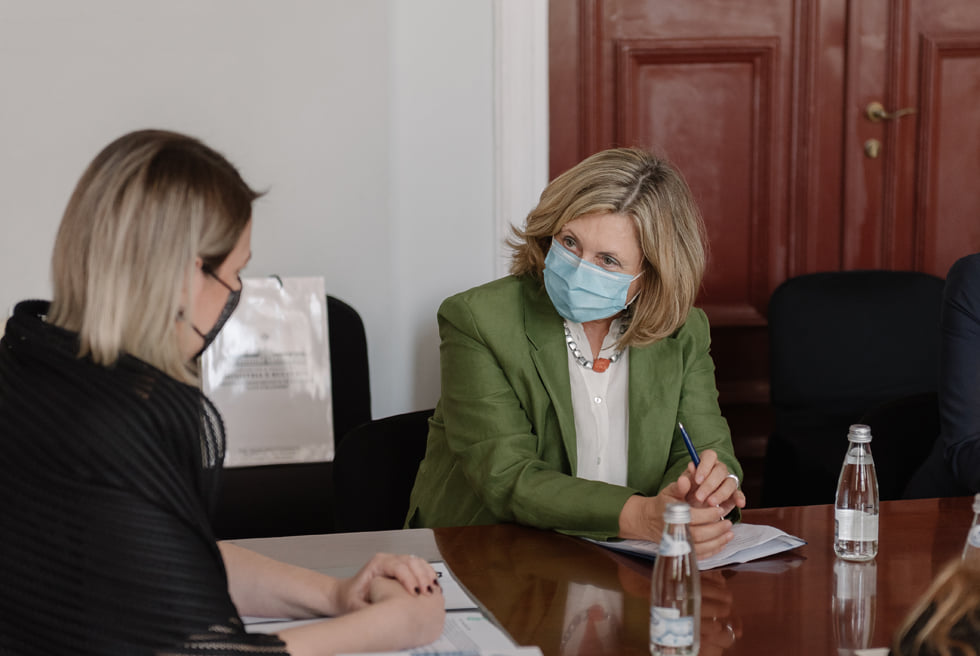


In September 2021, Memorandum of Cooperation was signed by the President of the Administrative Board of the EKBMM, Professor of Byzantine Archaeology at the Aristotle University of Thessaloniki, Mrs. Natalia Poulou, and the Minister of Culture of Albania, Mrs. Elva Margariti, Minister of Culture of Albania, on the cooperation between the two parties in the planning and implementation of joint projects for the restoration and conservation of monuments in Albania, research and educational activities, exchange of know-how, organization of exhibitions and other scientific activities (seminars, symposiums, lectures, publications, etc.). As a pilot action of cooperation between the two sides under the above Memorandum, it was decided to carry out a study and implement a project for the conservation of the frescoes of the Byzantine church of Agios Nikolaos in Mesopotamos.
The church of Agios Nikolaos is located in Delvino, in the southern part of Albania. It is the katholikon of a 13th century Stavropegial Μonastery from which only the perimeter fortification with its towers survives. The church is a very significant example of the naodomic architecture of the despotate of Epirus, which was founded in Arta by Michail Angelo Komnenos Doukas after the fall of Constantinople by the Crusaders (1204). Externally, it has rich ceramoplastic decoration and reliefs of mythological animals carved onto the masonry’s beams. Inside, it preserves fragmentary fresco decoration, but also very important marble elements. Furthermore, its floor bears a combination of marble tiles and mosaics.
In July and September 2022, a team of specialized scientists from EΚBMM, following the relevant permission of the Albanian authorities, visited the monument in order to carry out documentation and investigation works concerning the state of preservation, pathology, and technology of the decorative program. Based on the data collected, a conservation study for the wall paintings and decorative elements of the church was prepared on behalf of EΚBMM by the Directorate for the Conservation of Ancient and Modern Monuments of the Hellenic Ministry of Culture.
In June 2023, the conservation study for the wall paintings and decorative elements of the church was submitted to the Albanian authorities for approval. The study was prepared, on behalf of EΚBMM, by the Directorate for the Conservation of Ancient and Modern Monuments of the Hellenic Ministry of Culture, based on the documentation data collected by EΚBMM’s specialized scientists during the previous year. Following the relevant approval, preparations for the first phase of wall-painting conservation began in May 2024.
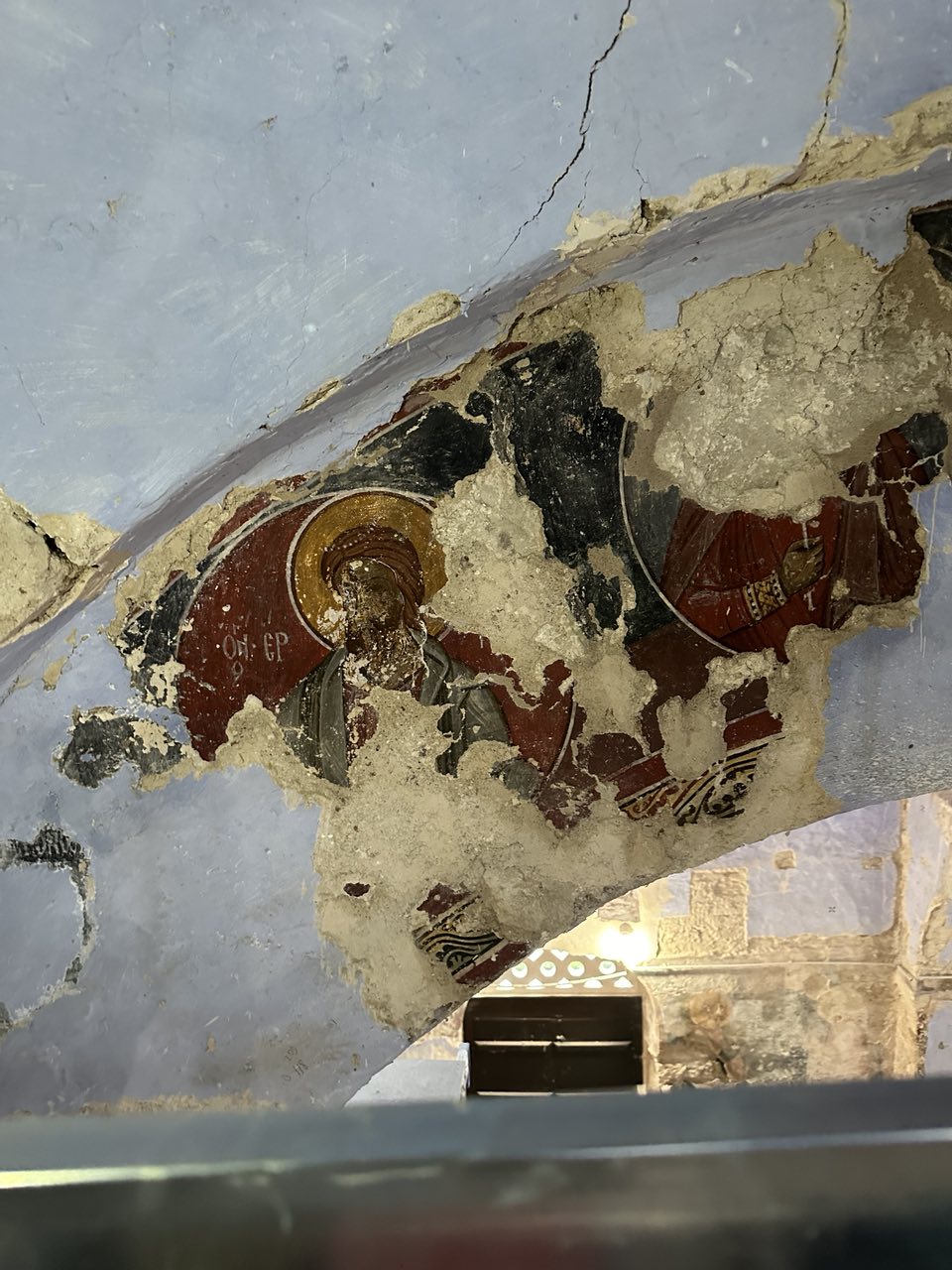
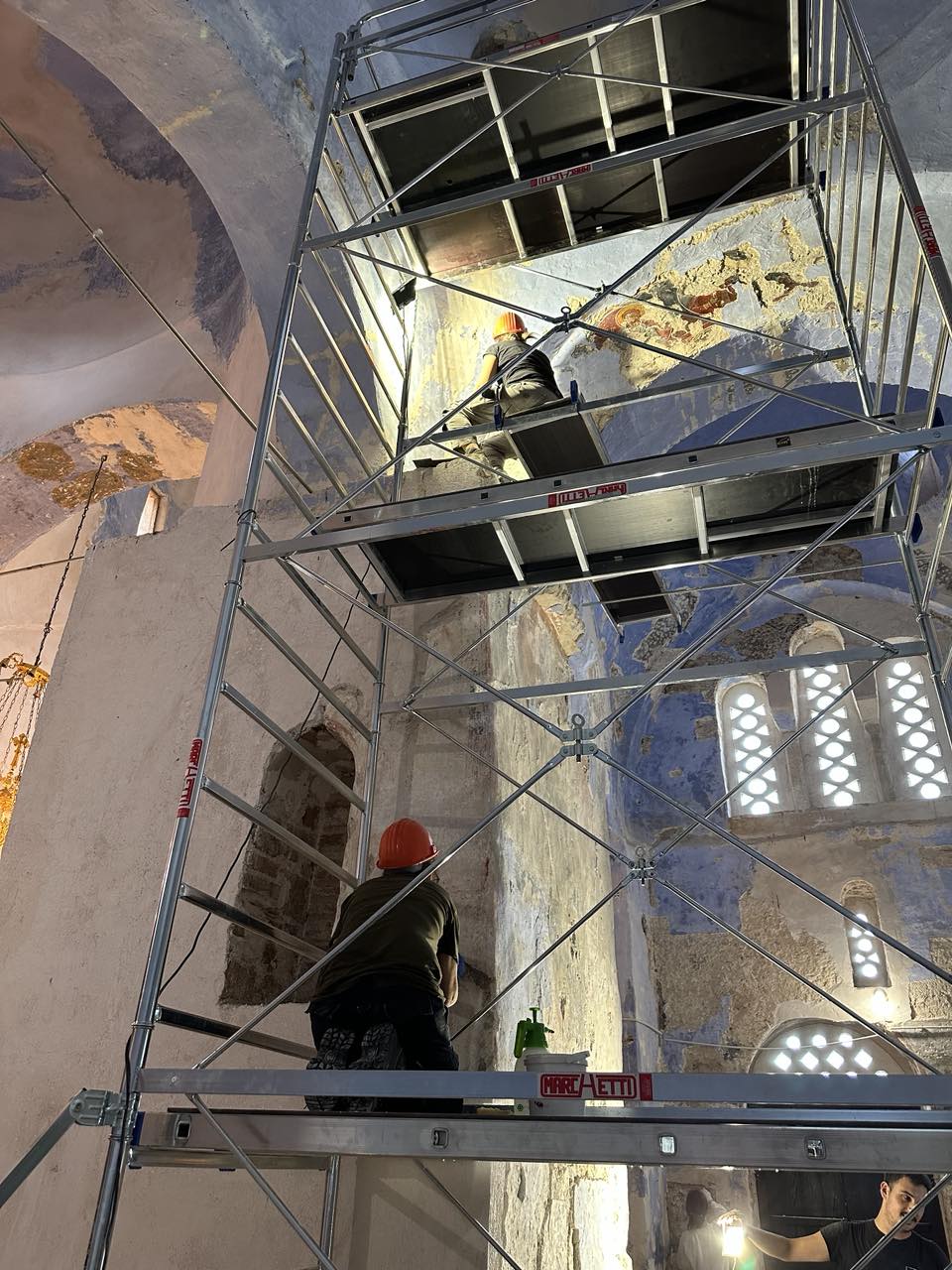
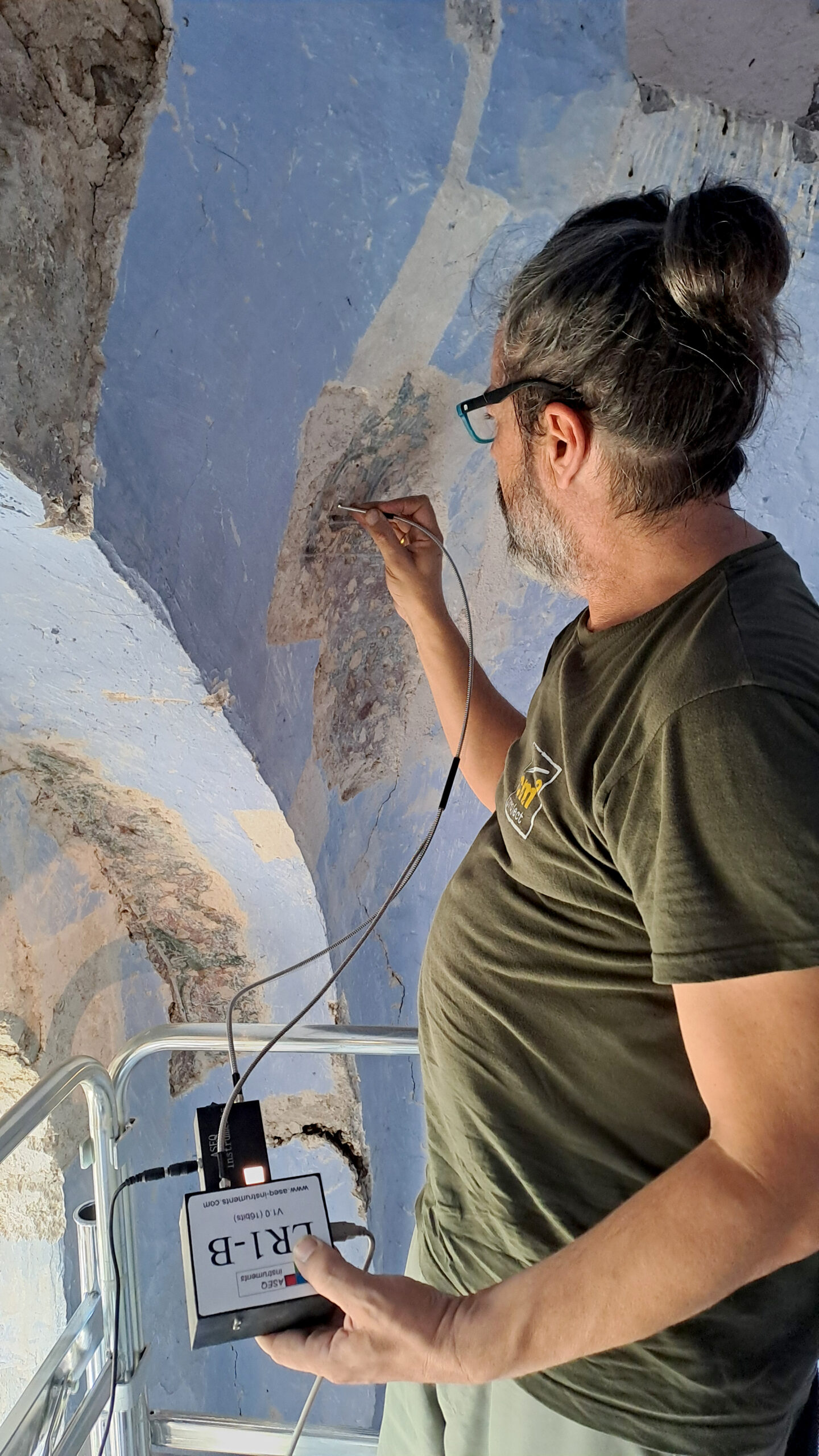
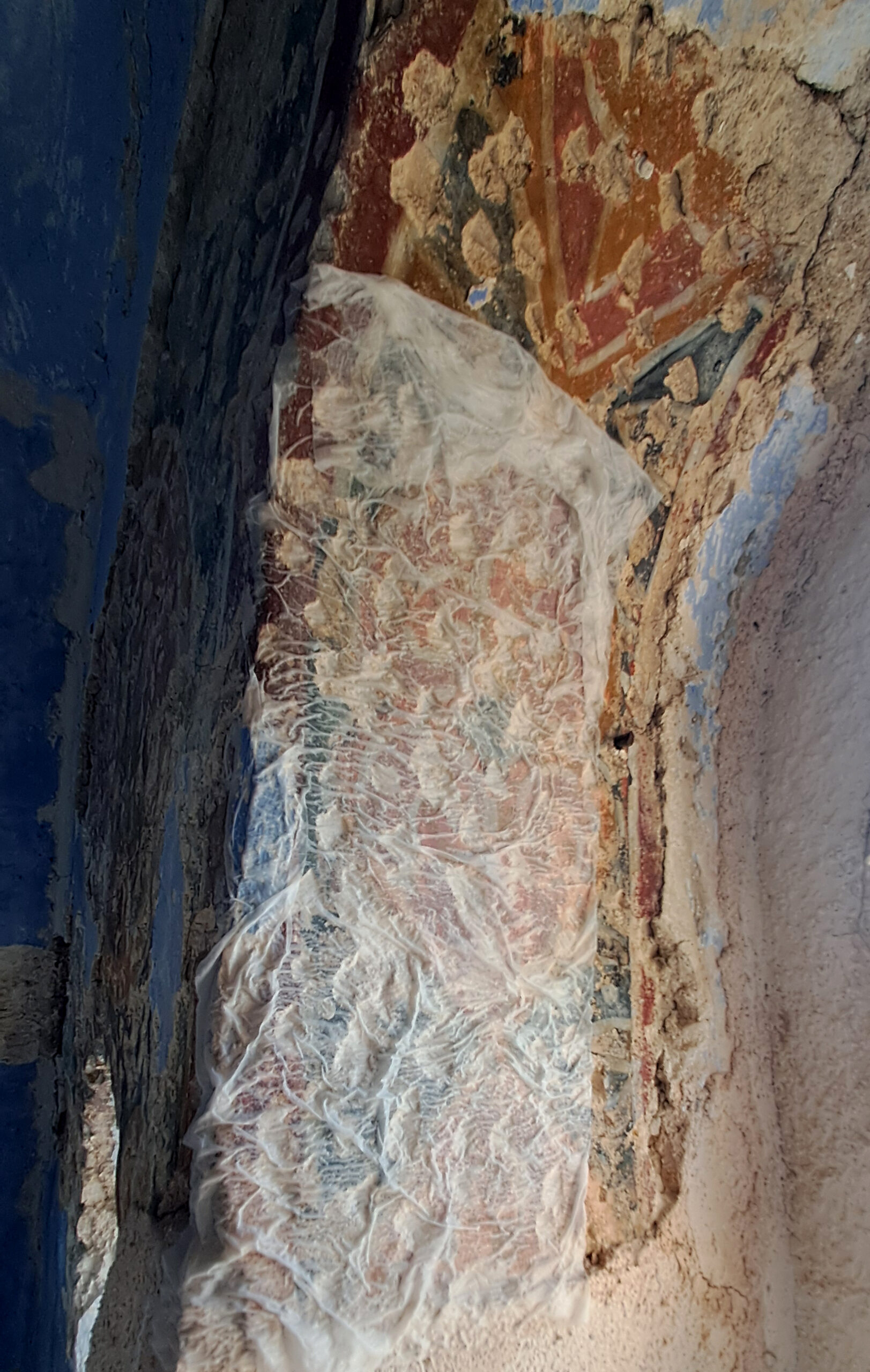
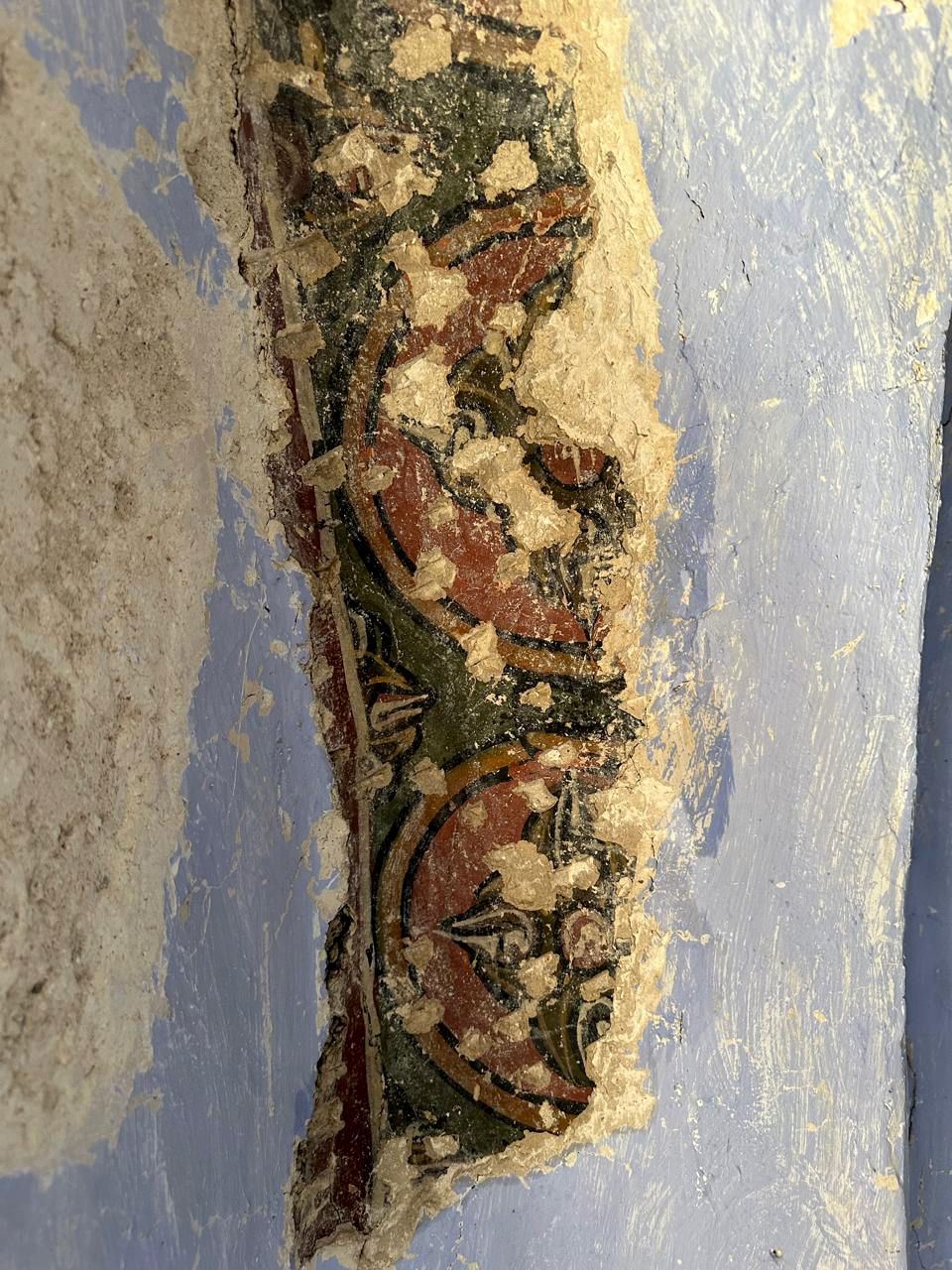
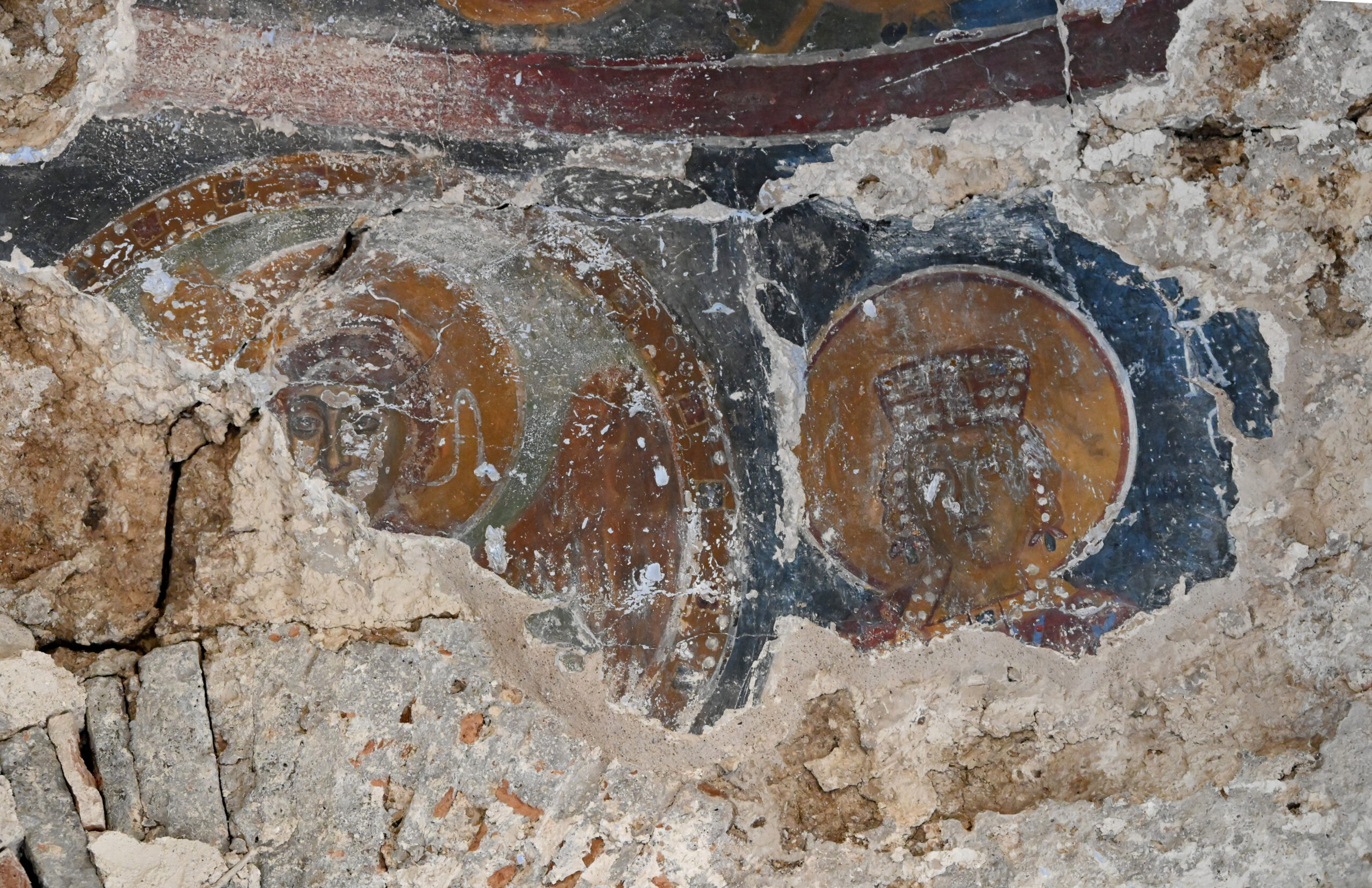
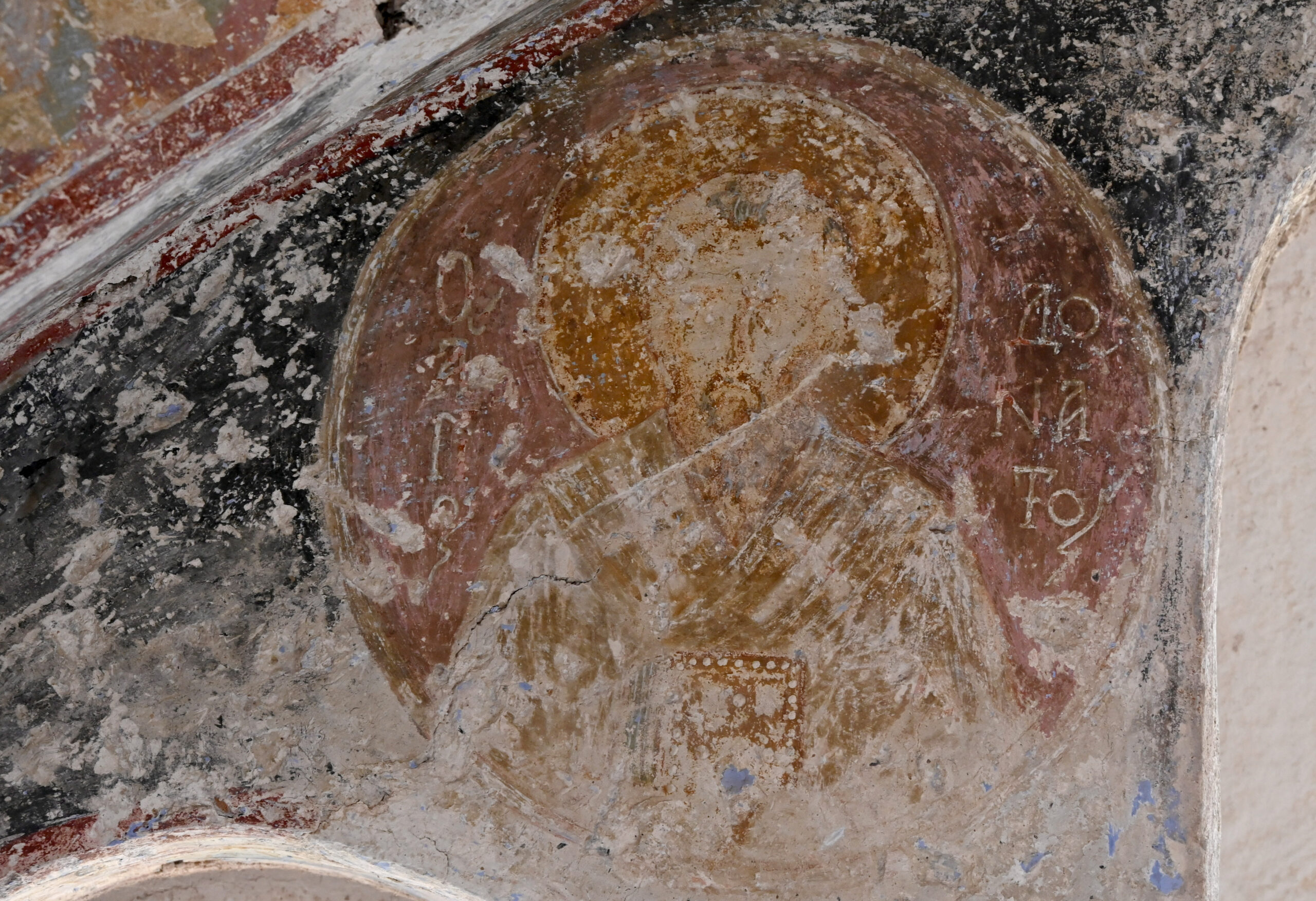
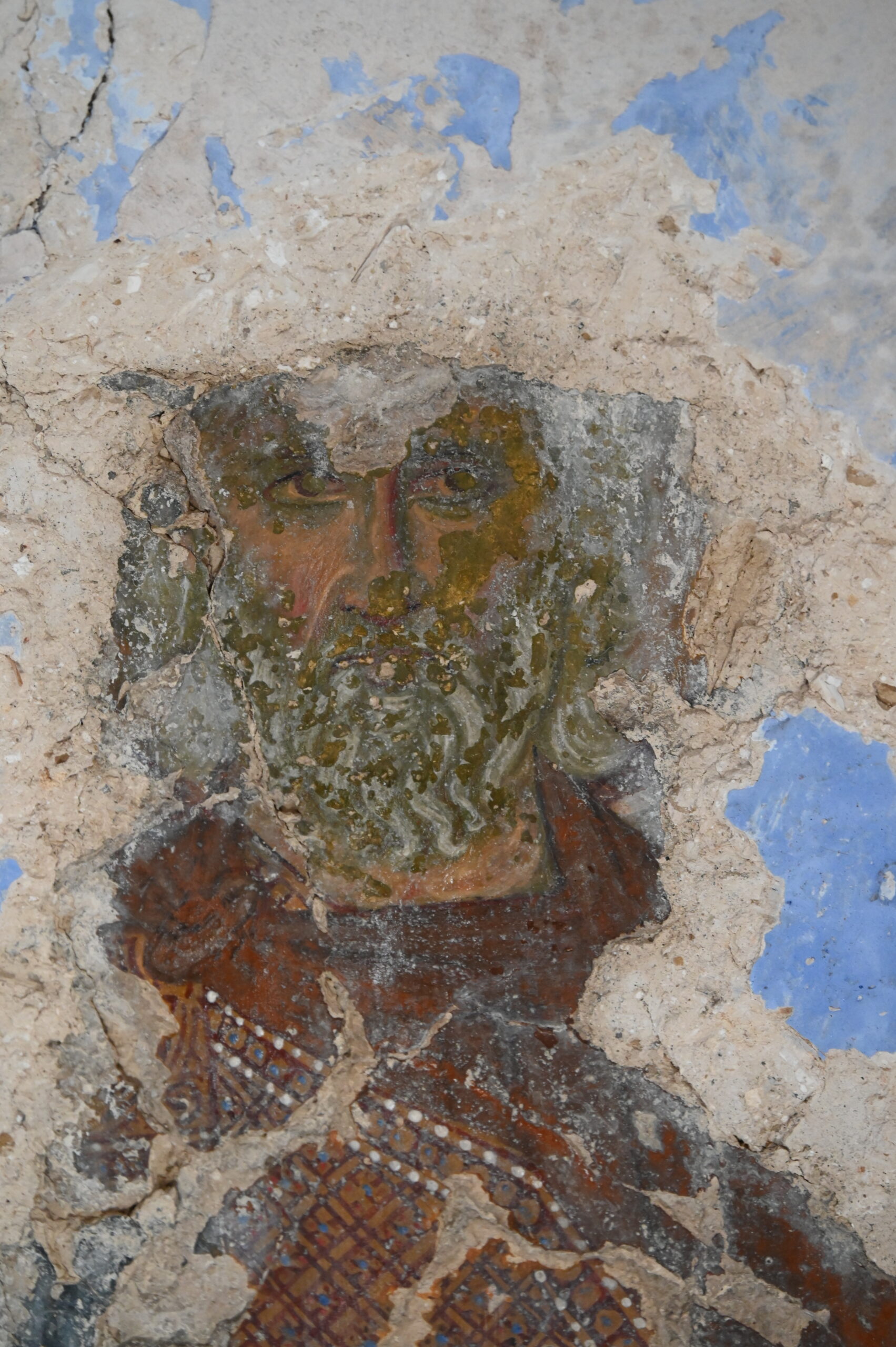
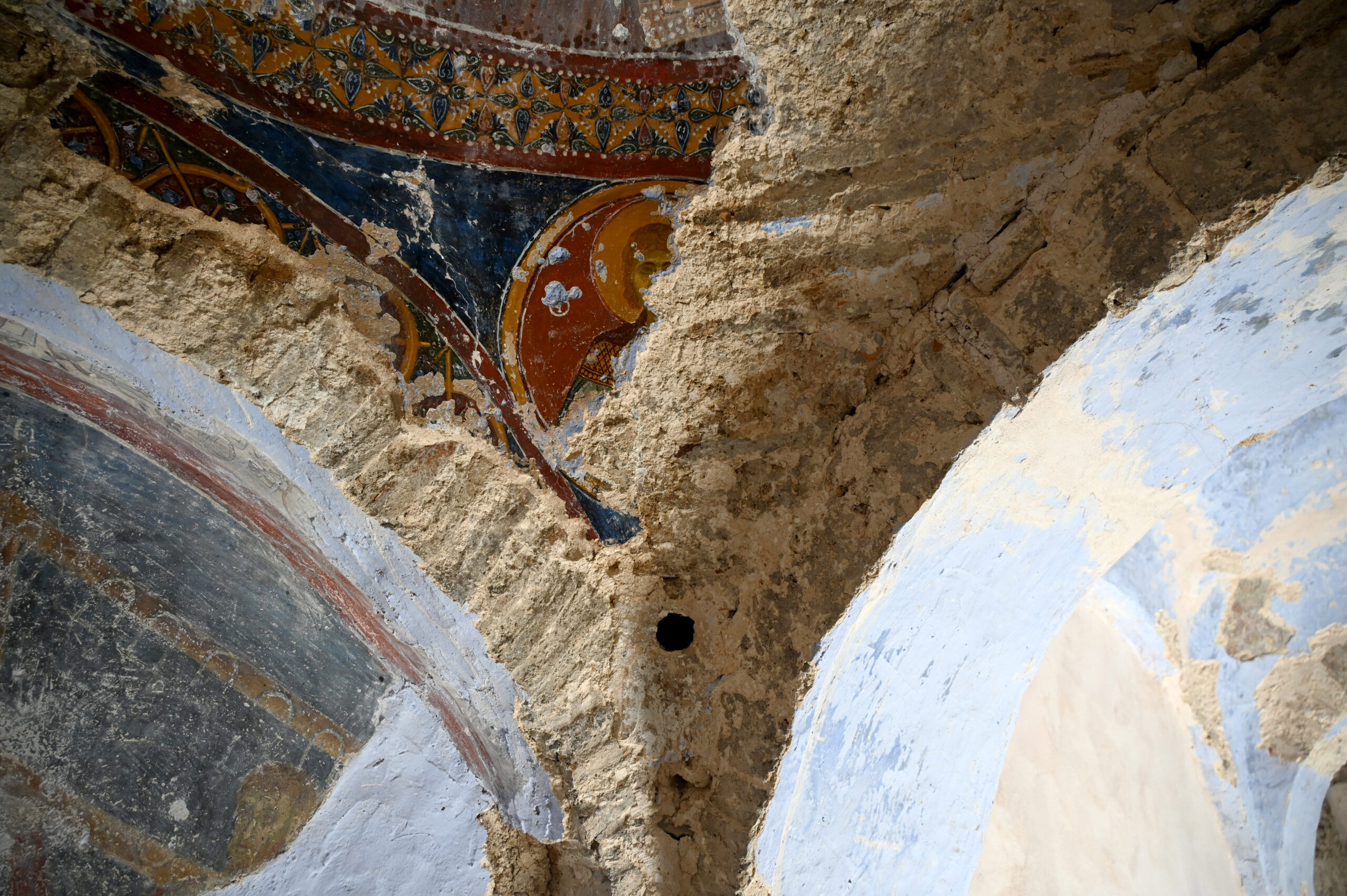
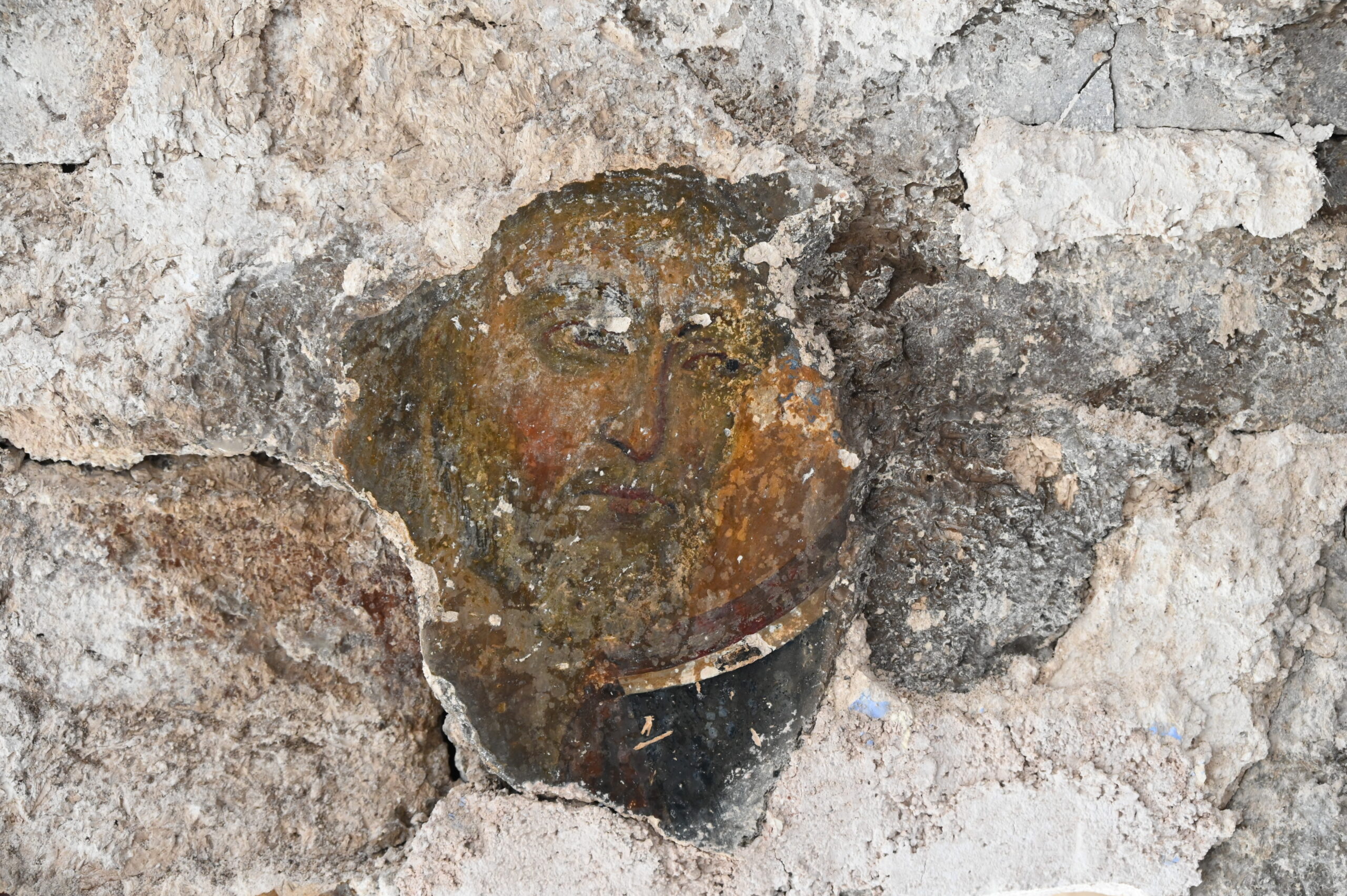
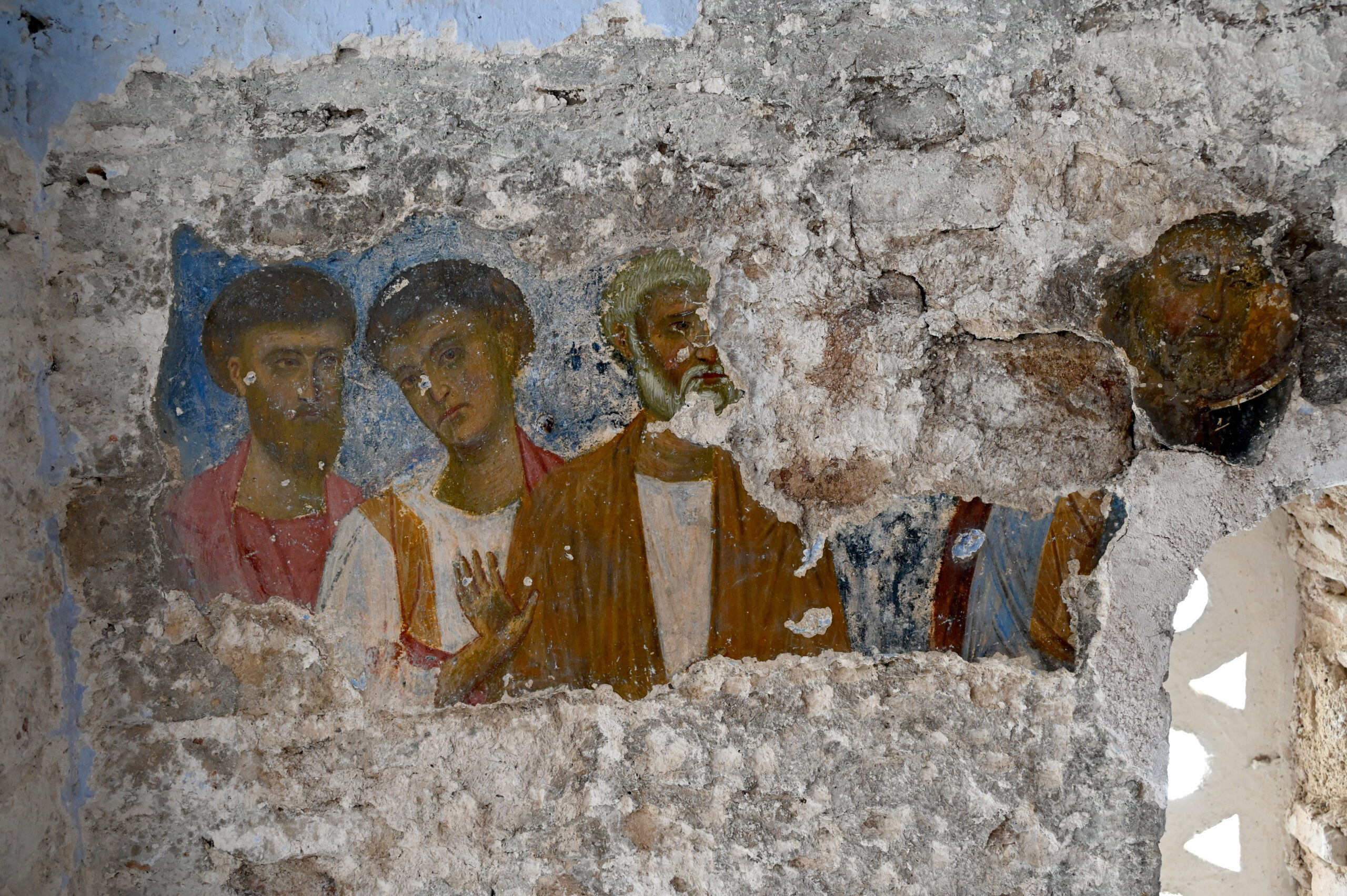
In September of the same year, a mission of specialized conservators of antiquities and works of art traveled to Albania (27/08–20/09/2024) and worked under the supervision of the Head of the Directorate for the Conservation of Ancient and Modern Monuments, Dr. M. Mertzani. During this period, the first phase of investigation and conservation works on the wall paintings of the katholikon of the Monastery of Saint Nicholas was completed. Investigative test cuts were carried out across the surfaces of the church up to a height of 8 meters, which could be safely reached using the available mobile scaffolding. A previously unknown wall-painting decoration was identified over a considerable area. Extensive interventions were also carried out, including the removal of later plaster and limewash layers, the definition of the boundaries of the painted areas, the consolidation of friable substrates, the re-adhesion of detached plaster layers, perimetric securing, surface desalination, and the consolidation of the powdering paint layer. Furthermore, non-destructive imaging and spectroscopic diagnostic and documentation methods were applied to determine the nature of the pigments belonging to different painting phases, producing particularly interesting results. Non-destructive analyses also documented the extensive presence of soluble salts (nitrates) on both the surface and within the structure of the wall paintings. The investigation works revealed wall-painting decoration over a large area, especially in the western and southern parts of the church, which had not collapsed in the past.
Between 10 June and 8 July 2025, the second phase of investigation and conservation works on the wall paintings took place. Investigative cuts were carried out in the higher parts of the church above the 8-meter level, along with extensive removal of later plaster and limewash layers, as well as works of boundary definition, consolidation, and surface desalination. To the great surprise and satisfaction of everyone involved, several previously unknown wall paintings were identified during this year’s campaign. On the occasion of the completion of this phase of works, on 5 July the monument was visited by the Ambassador of Greece, Ms. Konstantina Kamitsi, and the Consul General of Greece in Gjirokastër, Mr. Sokratis Sourvinos, in the presence of the Mayor of Finiq, Mr. Romaios Tsakoulis, their associates, and the Director of EΚBMM, Dr. Flora Karagianni. During the visit, all parties praised the important work carried out at the monument by the EΚBMM team, while thanks were expressed to the Albanian side for the excellent cooperation. The conservation works on the wall paintings are scheduled to continue and be completed in 2026. At all stages of the organization and planning of the project, the cooperation between EΚBMМ and the Institute of Monuments of Albania was excellent. Particularly important was also the assistance of the Municipality of Finiq in practical matters, as well as the substantial support provided by the Embassy of Greece in Tirana and the General Consulate of Greece in Gjirokastër.